
 Image 1 of 1
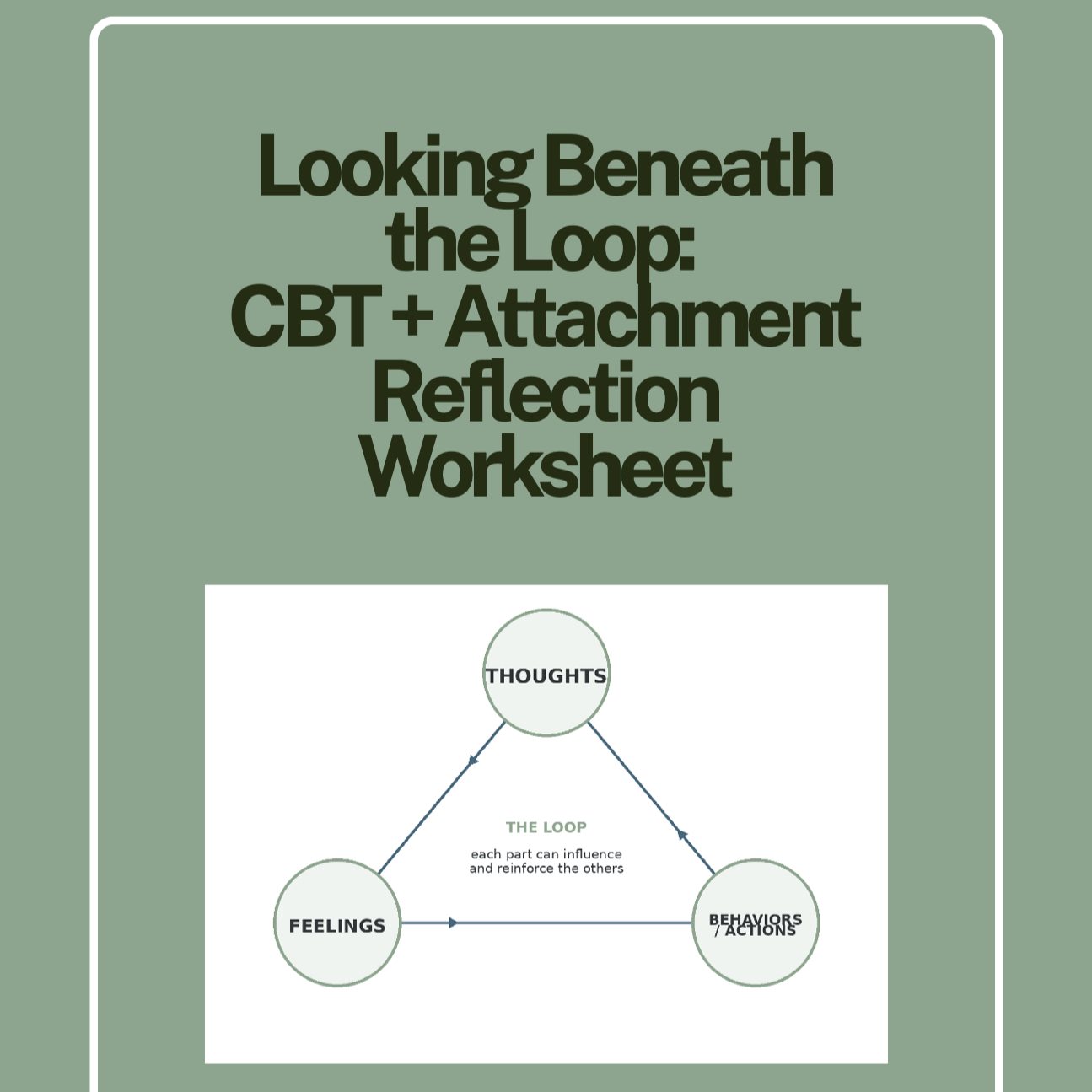
When we’re upset, it’s easy to get caught in a familiar loop: a thought triggers a feeling, the feeling influences how we respond, and that response can reinforce the original thought.
Looking Beneath the Loop is a guided reflection worksheet designed to help you slow that cycle down and understand what may be happening underneath it.
Using the CBT Triangle, you’ll explore the connection between your thoughts, feelings, and behaviors, then take the reflection one step further by identifying the unmet need that may be driving the reaction.
Rather than simply asking, “How can I change this thought?” this resource encourages you to ask, “What might this reaction be trying to tell me I need?”
From there, you’ll practice developing a more balanced and compassionate perspective and choosing a response that supports both your well-being and the need you’ve identified.
This 3-page printable worksheet includes:
A guided CBT Triangle reflection
Prompts for identifying automatic thoughts, emotions, and behaviors
A simple 0–10 feelings intensity scale
Reflection prompts for exploring unmet needs
An introduction to common attachment needs
Space to develop a more balanced thought and supportive response
Deeper reflection prompts for understanding and communicating your needs
Format: Digital PDF download
For personal use only
This resource is intended for educational and self-reflection purposes and is not a substitute for therapy, diagnosis, or individualized mental health care.
When we’re upset, it’s easy to get caught in a familiar loop: a thought triggers a feeling, the feeling influences how we respond, and that response can reinforce the original thought.
Looking Beneath the Loop is a guided reflection worksheet designed to help you slow that cycle down and understand what may be happening underneath it.
Using the CBT Triangle, you’ll explore the connection between your thoughts, feelings, and behaviors, then take the reflection one step further by identifying the unmet need that may be driving the reaction.
Rather than simply asking, “How can I change this thought?” this resource encourages you to ask, “What might this reaction be trying to tell me I need?”
From there, you’ll practice developing a more balanced and compassionate perspective and choosing a response that supports both your well-being and the need you’ve identified.
This 3-page printable worksheet includes:
A guided CBT Triangle reflection
Prompts for identifying automatic thoughts, emotions, and behaviors
A simple 0–10 feelings intensity scale
Reflection prompts for exploring unmet needs
An introduction to common attachment needs
Space to develop a more balanced thought and supportive response
Deeper reflection prompts for understanding and communicating your needs
Format: Digital PDF download
For personal use only
This resource is intended for educational and self-reflection purposes and is not a substitute for therapy, diagnosis, or individualized mental health care.